How to tell if a content writer can handle ambiguity in a brief
A content writer can handle ambiguity in a brief if they turn fuzzy inputs into clear next steps without freezing, guessing wildly, or waiting for…
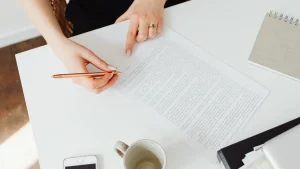
Person reviewing printed layouts and notes on a desk
Last updated: November 13, 2026
Key Takeaways
- A content writer handles ambiguity by moving forward from incomplete instructions, not by pretending the brief was clear.
- In the first 10 minutes, watch how the writer handles missing facts, not how smooth they sound.
- A writer should turn a vague brief into a short list of decisions, then make the safest temporary choice for each one.
- You judge it by checking whether the assumptions are visible, reasonable, and easy to undo.
A content writer can handle ambiguity in a brief if they turn fuzzy inputs into clear next steps without freezing, guessing wildly, or waiting for perfection. How to tell whether a content writer can handle ambiguity in a brief starts with useful questions, stated assumptions, and a draft that keeps moving. The steps below show what to look for in a content brief, editor feedback, client notes, and a discovery call.
What ambiguity handling looks like in a content writer

A content writer handles ambiguity by making progress from incomplete instructions, not by pretending the brief was clear. Picture this: you hand over a content brief with half the audience detail missing, two goals that clash, and a deadline that won’t move. A strong writer can still map the job, flag the gaps, and keep the work usable.
That skill shows up in 3 places: the questions they ask, the assumptions they write down, and the way they react when the brief changes after page 1. It’s less about sounding confident and more about staying accurate when the brief is under pressure.
Use this lens: if the writer treats every unclear point as a reason to stop, that’s a bad sign, and if needed, consult a qualified editor or content strategist; the Content Marketing Institute stresses that a brief should define audience, goals, and format before writing starts. If the writer fills every gap with guesses, that’s worse. The sweet spot is controlled uncertainty.
Not guesswork.
A good test is whether the writer can work through ambiguity in a way that still protects the piece’s goal. That matters on blog posts, landing pages, and thought leadership, where the first brief is often incomplete. For a broader view of the hiring process, see the hub on how to evaluate and choose content writers.
Which signals show a writer can work with a vague brief?
A strong writer shows 4 clear signals: they separate facts from assumptions, they ask about the missing parts first, they name the risk if the brief stays vague, and they keep their notes organized enough for an editor to follow.
Picture this: you paste a rough client note into a chat and ask for a draft angle. A writer who can handle ambiguity won’t rush to a fake certainty. They’ll say what they know, what they don’t know, and what they need to decide next.
Look for these signs in the writer’s response or working draft:
- They restate the goal in plain language.
- They mark missing pieces, such as audience, tone, or CTA.
- They give 2 or 3 sensible options instead of one random answer.
- They explain why one assumption is safer than another.
- They show where they’d want editor feedback before going wider.
A weak writer often does the opposite. They act as if a brief with missing details is complete, then bury the uncertainty inside fluffy copy. That makes the draft look polished while the strategy stays muddy.
Polished is not the same as usable.
The best part is that you can spot this without a full assignment. A 15-minute discovery call or a short written prompt is enough to reveal whether the writer can think through gaps without panicking.
How can you see ambiguity handling in a discovery call?
You can see it in the first 10 minutes by watching how the writer handles missing facts, not by how smooth they sound. Picture this: the client gives a half-formed brief, changes the audience mid-call, and admits the product positioning is still in flux. A good writer stays calm and starts sorting the mess.
Ask one messy prompt and listen for process. The writer should ask follow-up questions that change the shape of the task, not just fill time. For example, “Who is the reader?” is useful. “What should the reader do after reading this?” is useful. “What tone do you want?” on its own is too shallow if the goal is unclear.
A useful discovery call usually produces one of these three outcomes:
- The writer identifies the true goal behind the brief.
- The writer lists the missing inputs that block a clean draft.
- The writer proposes a path that works with the current facts.
Now, you might be wondering what bad looks like. It’s not just silence. A writer can sound engaged and still miss the point by agreeing too fast, asking only surface questions, or claiming they “can make it work” without naming the trade-offs. That’s a red flag.
Speed without clarity costs more later.
Watch how they handle constraint changes too. If you shift the audience, shorten the piece, or remove a key proof point, the writer should adjust the plan in the same conversation. If they can’t revise on the fly, they may need a brief that is already fixed and fully built out.
What should a writer do when the brief is vague?
A writer should turn the vague brief into a short list of decisions, then make the safest temporary choice for each one. Picture this: the brief says “write for founders,” but doesn’t say whether the piece is for first-time buyers, returning readers, or a niche market. The writer should not freeze. They should narrow the branch.
Here’s the catch: ambiguity is not one problem. It usually hides 5 different gaps:
- Audience gap
- Goal gap
- Voice gap
- Scope gap
- Proof gap
If you are unsure whether to treat those gaps as writing issues or strategy issues, consult a qualified editor or content strategist; the Content Marketing Institute and the Nielsen Norman Group both recommend clarifying audience and task before drafting. A writer who handles ambiguity well will separate those gaps instead of treating them as one foggy blob. They may say, “I can draft this now if I assume the reader is a mid-funnel prospect and the CTA is a consultation request; if that’s wrong, the angle changes.” That kind of note saves time because it makes the assumption visible.
A bad writer often does the opposite. They over-question the brief, asking for every missing detail before writing a single line. That can stall the project for days when a draft could have been built in parallel. The smarter move is to ask only the questions that change the piece in a real way.
Use this rule: if an unclear detail changes the structure, ask about it. If it only tweaks wording, make a reasonable call and flag it later.
Structure first, polish later.
A writer who can work through vagueness will also show where the brief needs a second pass from the client. That’s not resistance. It’s judgment. And judgment is the whole point of this screen.
How do you judge assumption handling in the writer’s draft?
You judge it by checking whether the assumptions are visible, reasonable, and easy to undo. Picture this: the writer gets sparse client notes, writes the draft, and then leaves a clean trail of what they assumed about audience, examples, and tone. That’s the pattern you want.
A useful draft will often include one of these signs:
- A note in the margin or comment thread that says what was assumed.
- A headline direction that fits the brief’s likely intent, not just the literal words.
- A paragraph structure that leaves room for editor feedback.
- A source choice that matches the target reader, not the writer’s personal taste.
The point is not to reward caution for its own sake. It’s to see whether the writer can make a good call under imperfect conditions. A writer who never assumes anything may be too hesitant. A writer who assumes everything may be too careless. Both are problems.
Here’s a simple check: ask what the writer did when two interpretations were possible. Did they choose one and explain why? Did they flag the second path in case the client wanted it? Did they keep the draft readable even though the brief was thin? Those answers tell you more than a polished sample ever will.
Reasoned guesses beat hidden guesses.
You should also look at how the writer handles editor feedback. If the editor changes one assumption, does the writer update the rest of the piece cleanly, or do three new errors appear? A writer who can handle ambiguity should be able to absorb one correction without wrecking the whole draft.
What common mistakes hide weak judgment?
The biggest mistake is judging the writer only on the final copy. Picture this: the published piece looks fine, but it took three rewrites because the writer never clarified the brief, misread the scope, or guessed at the audience. A clean finish can hide a messy process.
Watch for these traps:
- Overconfidence. The writer sounds sure, but nothing in the draft proves they understood the brief.
- Question overload. The writer asks for every missing detail and stalls the project.
- Silent guessing. The writer fills gaps without saying what was assumed.
- Scope creep. The writer turns one article into three because the brief was vague and they had no guardrails.
- Feedback whiplash. The writer can’t adapt after one round of editor feedback.
Each mistake has a cost. Overconfidence creates rework. Question overload burns time. Silent guessing creates wrong angles. Scope creep stretches the assignment. Feedback whiplash tells you the writer can’t stabilize the task once the frame shifts.
A better approach is to ask the writer to show the decision trail. That can be as simple as a short note attached to the draft: what was unclear, what was assumed, and what should be confirmed before final delivery. On a normal assignment, that note might be only 5 lines long, but it reveals a lot.
This is where many generic hiring guides go wrong. They treat ambiguity like a soft skill you can spot from a nice intro email. That misses the real test: how the writer performs when the brief is incomplete, changing, or contradictory. That’s the job.
FAQ
How do you test a writer with an incomplete brief?
You give the writer a brief with missing audience, tone, or proof details and ask for the first working plan, not the final article. The best response is a short set of clarifying questions plus a draft path that makes the assumptions visible. If the writer can’t separate the unknowns from the safe calls, that’s a warning sign.
What does a writer do when a brief is vague?
A good writer turns vague notes into decisions, flags the parts that still need confirmation, and writes from the safest reasonable assumption. The first step is not “write harder”; it’s “define the gap.” If they keep moving without naming the gap, the draft may look fine while missing the real goal.
How do you judge problem solving in a writer?
You judge it by the quality of the writer’s trade-offs, not by how many questions they ask. Strong problem solving means they can choose a direction, explain why it fits the brief, and adjust when editor feedback changes the picture. If they can only work when every detail is handed to them, the judgment is thin.
Drafted with AI; not yet reviewed by a person.