Compare Content Writer Portfolios by Evidence, Not Presentation
How to compare content writer portfolios by evidence, not presentation: A content writer portfolio can look polished and still hide weak work. Compare…

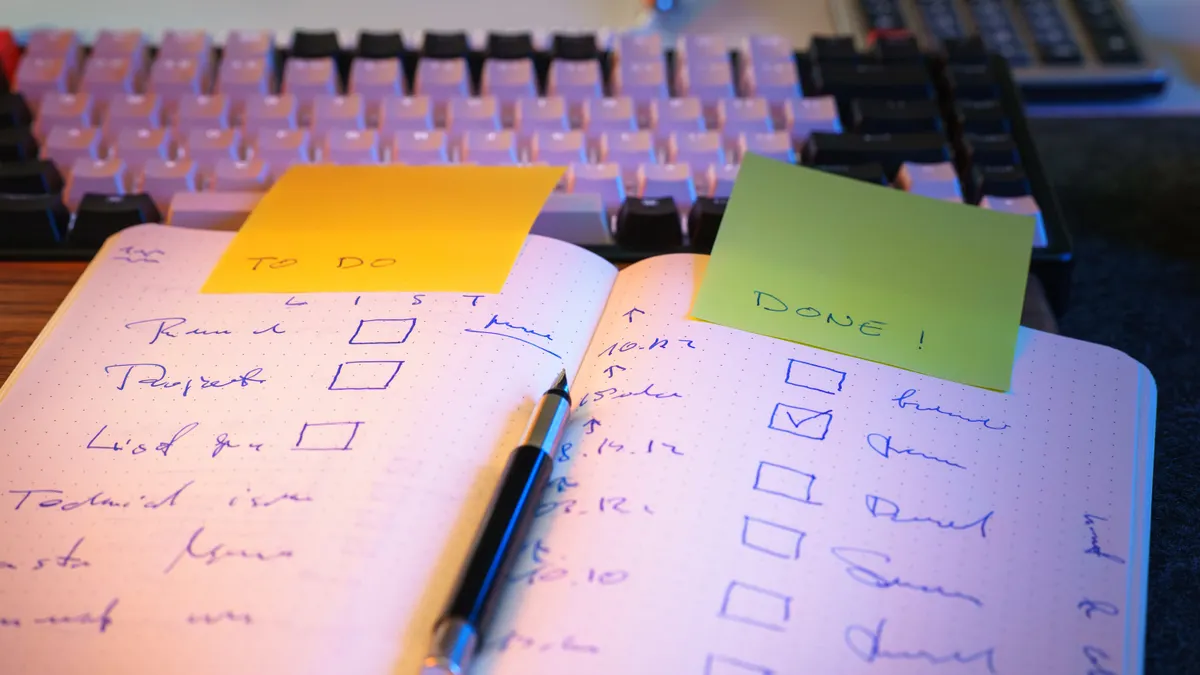
Hand marking a checklist in an open notebook
Last updated: November 13, 2026
Key Takeaways
- A strong portfolio lets you verify what changed, why it changed, and what came before it.
- Use the same 5-step check on each content writer portfolio, then score the evidence instead of the design.
- Writing samples should show judgment under a real brief, not just clean prose.
- Case study evidence is stronger when it shows what the writer says they did, not just the final page.
A content writer portfolio can look polished and still hide weak work. Compare proof, not presentation when you evaluate content writer portfolios. This guide shows you how to judge samples, case studies, and process notes so the prettier portfolio does not win by default.
Our Top 3 Picks at a Glance
| Option | Best For | Core Spec | Standout Feature | Action |
|---|---|---|---|---|
| #1 Best Overall | Comparing any portfolio fast | Clear sample context, revision history, and outcome notes | Shows how the work was made, not just what it looks like | Use as your benchmark |
| #2 Best Budget Pick | Screening many writers in 1 pass | Writing samples in a simple portfolio site, Google Docs, or Notion | Easy to spot missing context and vague claims | Use for first-round review |
| #3 Best Heavy-Duty / Upgrade Pick | Choosing for high-stakes content | Case studies, before-and-after samples, and draft notes | Gives the deepest evidence trail | Use when the hire matters most |
| Product / Option | Best For | Core Spec | Standout Feature | Action |
|---|---|---|---|---|
| #1 Best Overall | Fast, fair comparison | Sample context, revision trail, result notes | Evidence is easier to verify than polish | Start here if you want one standard for all portfolios |
| #2 Best Budget Pick | Shortlisting at speed | Google Docs, Notion, or a simple portfolio site | Low-friction review of drafts and notes | Use when you need a quick filter across many writers |
| #3 Best Heavy-Duty / Upgrade Pick | Complex or high-value work | Case studies, before-and-after samples, process detail | Shows how the writer thinks under edits and constraints | Choose this lens for strategic content roles |
Start with the evidence trail, not the layout
A strong portfolio is the one that lets you check what changed, why it changed, and what came before it. A slick homepage, a nice font, and eight clean thumbnails tell you almost nothing. A messy Google Doc with comments and revisions often tells you more.
Picture this: you open three portfolio site pages in 10 minutes and each looks impressive. One has polished clips, one has case studies, and one gives you draft notes in Notion and the final version side by side. The third is usually the easiest to compare. That is the point.
To compare by evidence, look for these signals first:
- Sample context — Where did the piece live? Blog piece, landing page, newsletter, or script?
- Revision path — Do you see drafts, comments, or a before/after version?
- Decision logic — Does the writer explain why a headline, angle, or structure changed?
- Outcome notes — Is there any sign of the goal, such as search intent, lead quality, or time on page?
- Scope — Is the sample one isolated piece or part of a larger content set?
A portfolio that names the assignment, channel, and revision history gives you real proof. A portfolio that only shows finished pages gives you a pretty surface. Not the same thing.
How do you compare content writer portfolios step by step?
You compare content writer portfolios by using the same 5-step check on each one, then scoring the evidence instead of the design. Keep the review in one tab, one worksheet, and one pass per portfolio so the order does not change your judgment.
Picture this: you have four candidates open, and each one has a different mix of PDF clips, a portfolio site, Google Docs, and a Notion page. The goal is not to admire any of them. The goal is to see which one proves judgment, process, and follow-through.
- Open the portfolio site, Google Docs, or Notion page and note whether the samples name the content type, audience, and publishing context.
- Check each writing sample for a draft trail, revision notes, or a before-and-after version that shows actual editing.
- Read any case studies for the problem, the writer’s role, and the outcome instead of treating the headline as proof. If you are unsure how to weigh it, consult a hiring professional and review guidance from the U.S. Department of Labor’s portfolio and sample-work advice.
- Compare 2 or 3 samples across the same content type so one strong blog piece does not hide weak landing-page writing.
- Decide whether the portfolio gives you enough evidence to predict how the writer handles your work.
A writer who can only show finished work may still be good. But a writer who shows process notes, edits, and sample context gives you a much clearer read. That extra evidence matters.
What should you look for in writing samples?
Writing samples should show judgment under a real brief, not just clean prose. The best samples can tell you what the piece was for, what shape it needed, and what trade-offs the writer made.
Here’s the catch: a good sample can still be misleading if it is stripped of context. A polished article with no brief attached may hide a weak draft that got heavy help from an editor. A simple Google Doc with comments may be more honest than a showroom page.
Look for these details in each sample:
- Channel fit: Does the tone match a blog piece, email, case study, or sales page?
- Audience fit: Does the language match a beginner, buyer, or technical reader?
- Structure choices: Are headings doing real work, or just breaking up text?
- Revision signals: Are there visible edits, tracked changes, or notes on why something moved?
- Freshness: Is the piece current, or is it so old that the format no longer reflects the writer’s current range?
A strong sample usually has a small, specific job and does it well. If every sample looks broad, glossy, and vaguely “SEO-friendly,” that is not a sign of range. It is a sign of blur.
What makes case study evidence more useful than a polished clip?
Case study evidence is stronger because it shows what the writer claims to have done, not just what the page looked like at the end. A good case study names the problem, the action, and the result in a way you can inspect.
Picture this: one writer shows a finished article. Another shows a case study that explains the brief, the draft changes, the headline test, and the final edit. The second one gives you more to compare because it shows the path, not just the destination.
Use this checklist when you read a case study:
- Problem — What was wrong with the original content or brief?
- Role — What did the writer actually handle? Strategy, draft, edit, or all three?
- Change — What changed from the first version to the final version?
- Evidence — Are there screenshots, draft notes, or sample links you can inspect?
- Result — Is there an outcome tied to the work, such as stronger clarity, better search fit, or fewer revision rounds?
A case study without role clarity is weak evidence. A case study with a neat story and no proof is still a story. The best ones are plain about what the writer did and what changed because of it.
How to spot process notes that show real craft
Process notes matter because they reveal how a writer thinks before the final draft gets polished. A page that shows outline choices, headline options, or revision rationale is usually more useful than a perfect final PDF.
A common mistake is to treat presentation as the same thing as process. It is not. A clean portfolio can hide a writer who depends on an editor to fix structure, tighten arguments, or make the piece usable. If you are unsure how to judge that gap, consult a hiring professional and compare the portfolio against common review guidance from the U.S. Bureau of Labor Statistics and similar career resources.
Look for process evidence such as:
- Outline notes that show how the writer shaped the piece before drafting
- Headline alternatives that show judgment about angle and intent
- Revision comments that explain why a paragraph was cut or moved
- Draft stages in Google Docs that reveal how the work improved
- Notion pages that include brief notes, links, and source context
A process-rich portfolio often feels less glamorous. Good. Glamour is not the goal. Evidence is.
On the flip side, a portfolio with no process notes can still be acceptable if the samples are tied to a clear brief and the writing is hard to fake. But if you are choosing between two writers, the one who shows thinking usually gives you less risk.
How do before-and-after samples change the comparison?
Before-and-after samples make comparison easier because they show what the writer fixed, not just what they published. That matters when you want to know whether the writer can improve weak material, not just start from scratch.
Picture this: you open a pair of drafts. The first is cluttered, unfocused, or too thin. The second has a cleaner lead, sharper headings, and a better flow. That gap tells you more than a finished page ever will.
A useful before-and-after set should show at least one of these:
- stronger structure
- tighter copy
- clearer audience match
- better transitions
- fewer filler phrases
- a sharper call to action
The comparison gets even better if the writer explains what changed and why. A before-and-after pair with no explanation can still help, but it leaves you guessing about skill versus cleanup.
This is where many portfolios fail. They show the final piece and ask you to trust the outcome. A better portfolio lets you see the edit path. That is the evidence most readers miss.
Which red flags mean the portfolio is mostly presentation?
A portfolio is presentation-first when it looks complete but gives you little to verify. That usually means the writer is hiding weak proof behind design, jargon, or vague claims.
Picture this: the portfolio has a sleek landing page, a few logos, and several clipped screenshots, but no dates, no context, and no role description. It feels impressive for 30 seconds. Then it falls apart.
Watch for these red flags:
- No context — You cannot tell where the piece was used or why it exists.
- No role clarity — It is unclear whether the writer drafted, edited, or only contributed ideas.
- No revision trail — There is no Google Doc, no comments, and no before-and-after view.
- No sample depth — Every sample is one screen long, with no supporting material.
- No specifics — The portfolio uses vague praise like “high-converting” or “SEO-optimized” without showing how.
A portfolio can also overstate polish by only showing the final screenshot. That makes it hard to compare writers, because you cannot see the same evidence across candidates. If you cannot inspect the work, you are comparing design sense, not writing skill.
The best part is that weak portfolios usually give themselves away fast. Once you know what proof looks like, the shiny stuff gets easy to ignore.
What is the fairest way to score portfolios side by side?
The fairest way is to use the same 4-part score for every content writer portfolio and keep your notes in one place. That keeps a nice presentation from sneaking past a weak evidence trail.
Use this simple comparison grid:
- Context: Does the sample name the format, audience, and use case?
- Process: Does the portfolio show draft notes, revisions, or working steps?
- Depth: Are there multiple samples with different kinds of work, not just one strong clip?
- Proof: Is there case study evidence, before-and-after material, or a clear role description?
Score each part from low to strong, then compare the notes, not the design. A writer with one great blog clip and no context may still be weaker than a writer with solid samples, a clear process, and honest revisions.
Do not let one flashy homepage overrule the rest. A portfolio is not a poster. It is evidence about how a writer works.
The same rule helps when you compare Google Docs, Notion pages, and a traditional portfolio site. Different formats are fine. The question is whether they reveal enough to trust the work.
Why evidence beats presentation every time
Evidence beats presentation because presentation can be styled in an afternoon, while evidence takes real work to gather. A good portfolio makes it easy to inspect sample depth, revision history, and process detail. A pretty one can still leave you guessing.
For a broader method on choosing writers, link this page back to the hub on How to evaluate and choose content writers. That bigger guide can help with the full hire decision. This page stays focused on the proof inside the portfolio.
The simplest test is this: if two portfolios had the same font and the same layout, which one would still look stronger? The answer is the one with better samples, better context, and a clearer draft trail. That is the one worth your time.
What should a content writer portfolio include?
A good portfolio should include samples with context, a clear role description, and some proof of process. That might be a Google Doc with comments, a Notion page with notes, or a case study that explains the brief and result. Without that, you are mostly judging surface polish.
How do you know if a writing sample is real work?
A real sample usually shows enough detail to check the context. Look for the publication type, the intended audience, the writer’s role, and any revision notes or linked drafts. If the sample has no source, no brief, and no trace of process, treat it as weak evidence.
What makes a portfolio credible?
A credible portfolio makes the work inspectable. It shows sample depth, before-and-after material, or case study evidence that explains what the writer did and why. The strongest portfolios are plain about the draft trail and do not rely on design alone.
Drafted with AI; not yet reviewed by a person.