What to Look for in a Content Writer Portfolio
For what should be in a content writer portfolio before you hire them? , look for 3 to 6 relevant published samples, clear bylines, at least 1 case study…

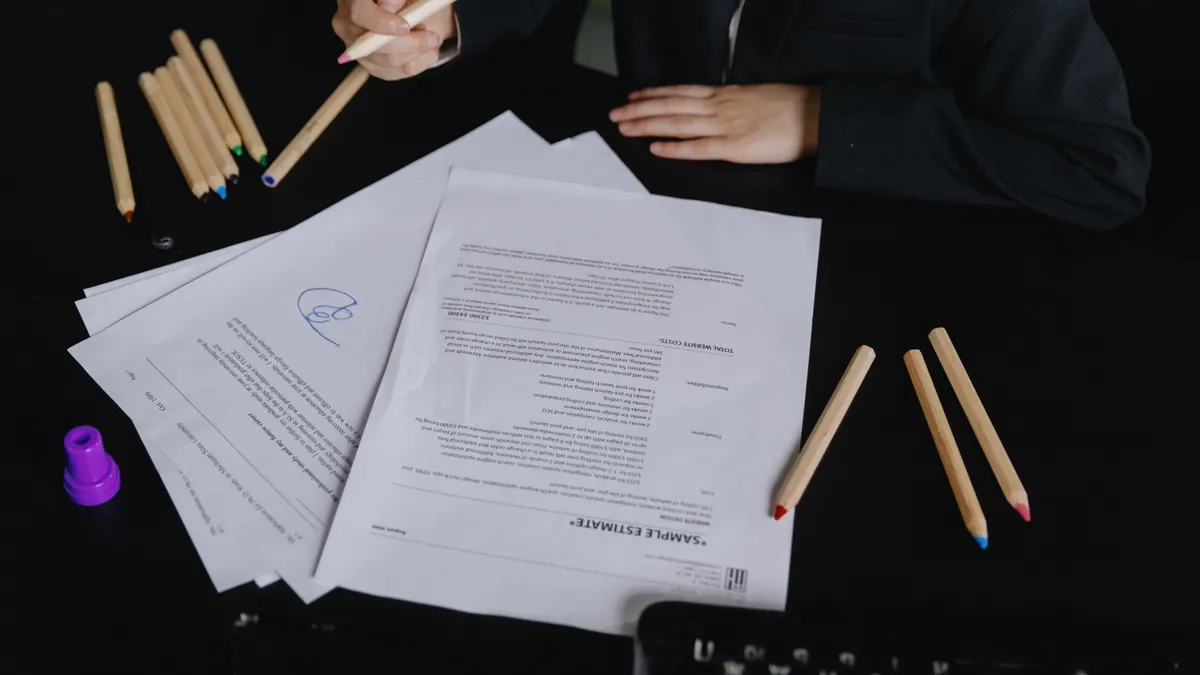
Hands reviewing printed pages at a desk
Last updated: October 26, 2026
Quick answer: for what should be in a content writer portfolio before you hire them?, look for 3 to 6 relevant published samples, clear bylines, at least 1 case study, named topic areas, and one sample tied to a real brief.
In short: a strong content writer portfolio shows proof of day-to-day writing judgment, not just polished pages. It should let you see the writer’s bylines, published samples, case studies, topic fit, and how they handle a real content brief.
Key Takeaways
- A content writer portfolio should show the writer can do your kind of work, in realistic conditions.
- I look at structure before evidence.
- A writing portfolio raises concerns when it hides authorship, overstates range, or lacks job relevance.
- A stronger portfolio shows process as well as polish.
This piece is for someone hiring a content writer and trying to separate “looks good” from “can do the job.” It assumes you already have a role in mind, such as blog posts, landing pages, newsletter copy, or long-form articles. It does not tell you how to evaluate writing quality itself, how to test a writer before hiring, or how to choose between candidates; that belongs in the linked hub on content writer hiring and evaluation. If money decisions are involved, consult a qualified adviser for your own situation. For attribution and transparency standards, see the Associated Press Stylebook and the Society of Professional Journalists’ Code of Ethics.
What a content writer portfolio should prove
A content writer portfolio should prove that the writer can produce work like the work you need, under realistic conditions, and not just a few attractive pages. That means you are looking for evidence of repeatability: can they follow a content brief, stay on topic, match a brand voice, and write for a specific reader without drifting into filler?
A strong portfolio does more than show a final piece. It should also show the path from brief to outcome. A published sample tells you what the writing looked like in the wild. A byline shows that the writer has been credited on a real publication. A case study shows the result of their work in context, even if the metric is qualitative rather than numeric. Together, those pieces are more useful than a gallery of anonymous screenshots.
What the portfolio should not do is hide the writer’s role. If every sample is ghostwritten and the writer cannot explain what they actually wrote, that is a weakness, not a neutral detail. If every sample is from one niche or one format, the portfolio may still be fine for that niche, but it is narrower than it looks.
A useful portfolio also shows topic relevance. A writer who has published on payroll software, B2B SaaS, or small-business taxes may be a better fit for those topics than a writer whose samples are all generic listicles. Topic fit often predicts how much ramp-up time the writer will need. A portfolio that is visually polished but topically random gives you less signal than a plain page with four directly relevant clips.
For hiring, the standard is not “best writing on the internet.” The standard is “enough evidence to predict whether this person can do the work at your level of complexity.”
What should be in a content writer portfolio?
A content writer portfolio should include five things at minimum: published samples, bylines, at least one case study, a clear note on topic areas, and a sample of work that reflects a real content brief. That is the core evidence set. Anything less forces you to guess.
Here is the checklist I use when reviewing one:
- Open with the writer’s name and role. The portfolio should say who wrote the work and what kind of writing they do. If the writer only says “freelance writer” and gives no focus, that is too vague. A good portfolio makes the lane visible in one screen.
- Show 3 to 6 published samples. Fewer than 3 makes it hard to see consistency. More than 6 can work, but only if the strongest examples are easy to find. Each sample should be accessible in one click or clearly labeled if it is a PDF.
- Include bylines where possible. A byline is the published credit attached to a piece. It matters because it shows the work was attributed to the writer, not just pasted into a folder. If a byline is missing, the writer should explain why.
- Add at least one case study. A case study is a short account of a project: what the brief was, what was written, and what happened afterward. It does not need to be a sales pitch. It should show process, constraints, and outcome.
- Name the subject areas covered. If the writer works in finance, healthcare, SaaS, parenting, or e-commerce, that should be explicit. Topic relevance often predicts how much editing you will need later.
- Show one sample tied to a content brief. A content brief is the instruction set for a piece: audience, angle, SEO target, word count, tone, structure, and any sources or product notes. A portfolio that includes a brief-side summary shows how the writer responds to direction, not just how they write in a vacuum.
- Make authorship and collaboration clear. If an editor, strategist, or subject-matter expert shaped the final piece, the portfolio should say so. That transparency matters because it tells you what the sample actually measures.
- Use a clean layout, not a fancy one. A simple page, a PDF, or a Notion portfolio can all work. The format matters less than the clarity. If I need more than 30 seconds to understand the writer’s range, the portfolio is doing too much or too little.
Two reputable source points on publishing and sourcing standards are worth keeping in mind: the Associated Press Stylebook for byline and attribution conventions, and the Society of Professional Journalists’ Code of Ethics for transparency around sources and authorship. A portfolio does not need to be journalistic to benefit from the same standards of clarity.
How do I judge the work without overthinking the design?
I judge the structure first, then the evidence. A flashy portfolio with weak proof is still weak.
Start with the first screen. In 5 to 10 seconds, I should be able to answer three questions: what does this writer do, what subjects do they cover, and what kind of work have they actually published? If I cannot answer those quickly, the portfolio is not helping me.
Then check whether the samples are recent enough to suggest current practice. If every clip is from several years ago and nothing has changed since, that may mean the writer is inactive or no longer focused on the field. A portfolio should not be a museum. It should show living work.
Next, compare the sample types to the work you need. If you need explainers, do not be distracted by a beautiful brand manifesto. If you need lifecycle email or product pages, a portfolio full of opinion essays is only partial evidence. The closer the sample is to your brief, the better.
Then look for signs that the writer can work from constraints. A portfolio sample that includes the target publication, audience, or assignment notes is stronger than one that appears with no context. If the writer can only show output and not process, you do not know whether the result came from skill, luck, or heavy editing.
A useful portfolio also shows range without chaos. Range means the writer can handle different angles, tones, or formats within a coherent lane. Chaos means the portfolio jumps from crypto to recipes to legal summaries with no explanation. Range is a plus; randomness is not.
One more check: does the portfolio reflect the writer you are hiring, or a team? Some writers present work that was heavily edited, designed, or strategized by others. That is not disqualifying, but it changes what the sample can predict. If the portfolio is silent on collaboration, ask for context before you make a decision.
What are the red flags in a writing portfolio?
A writing portfolio has red flags when it hides authorship, oversells breadth, or shows no connection between the samples and the job.
Here are the most common ones:
- No bylines anywhere. This can mean the writer works mostly under ghostwriting arrangements, or it can mean they have not published much under credit. Either way, you have less proof of authorship.
- Only screenshots with no live links. Screenshots are easy to fake and hard to verify. If the sample cannot be traced to a real publication, treat it cautiously and, if needed, consult a qualified professional before relying on it.
- No case study, no brief, no context. That usually means the writer wants you to judge style alone. Style matters, but it does not tell you how they work.
- Every sample is in a different niche. A portfolio that jumps across unrelated industries can suggest the writer takes anything, but it also suggests shallow topical depth.
- Titles that do not match the content. If the headline promises one thing and the piece delivers another, the portfolio may be trying to impress rather than represent real work.
- Overuse of generic “results” language. Phrases like “increased engagement” without any explanation can be a cover for weak evidence. A good portfolio does not need a fake statistic to sound credible.
- No distinction between owned, edited, and ghostwritten work. If the writer claims everything equally, you cannot tell what they personally contributed.
The cost of these red flags is simple: more guesswork, more revision, and less confidence that the writer can work to your standard. For a content team, that often turns into avoidable back-and-forth in the first draft cycle.
One honest limitation belongs here: a portfolio can show strong samples and still fail to predict reliability, communication speed, or deadline discipline. That is why the portfolio should be treated as evidence, not proof of fit, and you should consult a qualified professional if the decision carries legal, financial, or compliance risk.
When should I stop trusting the portfolio alone?
I should stop trusting the portfolio alone when the samples are not close enough to the work I need, when authorship is unclear, or when the writer’s examples all depend on heavy editorial support.
The samples are all from a different format: That means the portfolio is showing skill in a neighboring medium, not the one you need — ask for work in the relevant format or move on.
The writer cannot explain their role on each piece: That means the portfolio may reflect a team effort more than individual skill — treat the samples as partial evidence only and consult a qualified professional if you need a higher-stakes judgment.
The topic area is unrelated to your brief: That means the writer may need substantial ramp-up time — expect more onboarding, or choose someone with closer subject matter experience.
The work is all anonymous or uncredited: That means you cannot verify authorship — ask for better-documented clips or look elsewhere.
The samples are polished but generic: That usually means the writing is safe, not sharp — look for a portfolio that shows voice, specificity, and clear audience awareness.
The portfolio has no date or publication context: That means you cannot tell whether the work is current — prioritize recent clips, especially for fast-changing topics.
I would also stop short of treating a portfolio as a promise. It is a snapshot, not a contract. A writer can have excellent samples and still not be the right fit for your workflow, your brand voice, or your approval process. On the other side, a modest portfolio can belong to a very capable writer who is new to publishing credits or working in a narrow niche. The portfolio tells you what has been shown, not everything the person can do.
What makes a portfolio stronger for day-to-day writing work?
A stronger portfolio shows process, not just polish. That means the best portfolios often include a brief excerpt, the publication or client type, the writer’s role, and a short note on what problem the piece solved.
For day-to-day work, I look for evidence that the writer can handle the unglamorous parts: turning a rough angle into a usable draft, staying within a word count, writing to a brand voice, and making a source-driven piece readable. That matters more than decorative page design.
A portfolio also gets stronger when it is organized by use case. For example, a writer might group samples under “SEO blog posts,” “email nurture,” “editorial features,” and “product copy.” That helps you match the portfolio to your need in under a minute. If everything is dumped into one long list, you have to do the sorting yourself.
Another useful sign is consistency in attribution. If the writer includes publication names, dates, and a brief line about scope for each sample, that suggests discipline. If the samples are presented with no labels at all, the portfolio is doing less of the hiring work for you.
Finally, a strong portfolio does not pretend one sample can speak for all work. It shows enough range to be credible and enough focus to be useful. That balance predicts everyday performance better than a single standout piece.
If you want a fuller framework for deciding after the portfolio stage, the hub on content writer hiring and evaluation covers the next step.
How much should I expect to see before I can make a judgment?
I should expect enough evidence to see a pattern, not a perfect archive. Three to six relevant samples, one case study, and clear byline information are usually enough to form a first judgment about fit.
The judgment you are making is practical: can this writer likely handle the work you have? A portfolio is most helpful when it reduces uncertainty around topic fit, attribution, and process. It is less helpful when it is meant to impress every possible reader at once.
If the writer’s portfolio gives you clarity on those points, that is a good sign. If it does not, the problem is not always the writer’s skill; sometimes the portfolio is simply built for the wrong audience. A freelancer who wants editorial assignments may present a different portfolio than a writer who wants B2B assignments. The right portfolio is the one that matches the job.
A final caution: do not mistake volume for quality. Twenty samples can still tell you less than five well-chosen ones with clear context. The point of a portfolio is not to collect everything. It is to make the next hiring decision easier.
How many samples should a writer have?
Three to six relevant samples is usually enough to show pattern, range, and subject fit. Fewer than that can feel thin, especially if the samples are similar. More can help, but only if the strongest pieces are easy to find and the portfolio does not become a pile of links with no explanation.
Should you trust ghostwritten samples?
You can use ghostwritten samples as evidence, but only if the writer is clear about what they contributed. Ghostwriting is common in content work, yet it changes what the sample proves. A ghostwritten piece may show drafting ability, but not publication credit or solo authorship. Clarity matters more than the label.
What makes a strong writing portfolio?
A strong writing portfolio shows relevant published samples, visible bylines, one or more case studies, and a clear fit with the kind of work the writer wants to do.
Drafted with AI; not yet reviewed by a person.