How to Set Approval Stages for Outsourced Content Teams
Use 3 approval stages for most outsourced content teams: draft review, editor approval, and stakeholder sign-off. In this piece on How to set approval…

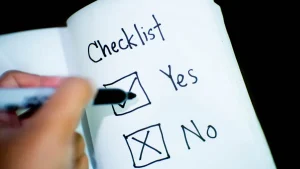
Hands marking a workflow diagram on a clipboard
Last updated: October 29, 2026
Quick Answer
Use 3 approval stages for most outsourced content teams: draft review, editor approval, and stakeholder sign-off. In this piece on How to set approval stages for outsourced content teams, the fastest workable setup is usually 3 gates, 1 owner per gate, and 1 clear handoff rule before the first draft leaves the writer’s desk. If the approver, editor, and stakeholder each know when to step in, the content calendar moves without endless rewrite loops.
Key Takeaways

- A useful approval workflow protects brand accuracy, factual accuracy, and publishing speed.
- Set 3 approval stages by naming one decision-maker per stage and locking the handoff rule early.
- Each stage should check a different risk layer, or the workflow duplicates effort.
- Clear handoffs and version control show the current draft, owner, and decision at every step.
Outsourced teams usually fail in one of two ways: every person can comment at every time, or no one knows who has the final say. Both create delay. The fix is not more review. It is clearer review.
Start by deciding what the approval workflow must protect
A useful approval workflow protects three things: brand accuracy, factual accuracy, and publishing speed. If a stage does not protect one of those, cut it.
Start with the real risk in your setup. A SaaS blog with compliance claims needs tighter sign-off than a lifestyle publication that mostly edits for tone. A B2B team with a monthly content calendar may need a two-stage approval path; a highly regulated team may need three. The point is to reduce mistakes as early as practical. The cheapest stage is often the first one, but not every issue can be caught there.
Set your scope before you name the stages. Decide whether the workflow covers only first drafts, or also updates, refreshes, and repurposed assets. Then write the one sentence that defines success: “A draft is approved when it matches brief, voice, facts, links, and formatting, and no further revision is needed before scheduling.” That sentence becomes your decision rule.
Do not build a workflow around personalities. Build it around tasks. The editor should own structure and quality. The approver should own the final yes. The stakeholder should only review what requires business judgment. If a stakeholder is commenting on sentence rhythm or headline options, the workflow is already too loose.
A practical starting point is 3 gates: draft review, editor approval, and stakeholder sign-off. That is enough for many outsourced content teams and usually easier to manage than a 4- or 5-stage chain. If you add more than that, the burden on version control rises fast.
This page fits inside the larger outsourced content workflow and quality control guide, which covers the broader system around intake, scheduling, and publishing.
How do I set approval stages for outsourced content teams?

Set approval stages by assigning one decision-maker per stage, defining what each stage checks, and locking the handoff rule before the first draft arrives. The workflow should be simple enough that a new teammate can follow it on day one. For practical planning, start with 3 stages and 1 owner per stage.
Use these steps in order.
- Map the draft path on one page. Write the stages from first draft to publish in the order they happen, such as writer → editor → stakeholder → scheduler. When it works, nobody has to ask where the draft goes next.
- Assign a single owner to each stage. Name one approver, one editor, and one stakeholder for each type of project. If two people share one gate, comments tend to conflict and the draft sits still for a day or two while they reconcile them.
- Define the pass/fail rule for each gate. For example, the editor checks structure, source support, and house style; the stakeholder checks business claims, product accuracy, and compliance language. The result should be a simple yes/no decision, not a pile of open-ended notes.
- Set the maximum review window. Give each approver a deadline, such as 24 or 48 hours, that matches your publishing cadence. A content calendar can absorb a one-day pause; it usually cannot absorb an open-ended review cycle.
- Choose one channel for approvals. Use the CMS, a project board, or a shared document, but not all three. One channel keeps the current draft visible and reduces the chance that someone approves an old version by mistake.
- Write the revision trigger. Decide what sends a draft back to the writer and what can be fixed by the editor in place. When this is clear, small issues get corrected without reopening the whole chain.
- Test the workflow on three drafts. Run it on a short article, a standard article, and a more sensitive piece. If the same step stalls twice, the stage is doing too much work and needs to be split or removed.
A workable model for many outsourced teams is draft review first, then editor approval, then stakeholder sign-off only when the piece contains claims, product references, or legal risk. That keeps the calendar moving while still protecting the parts that can hurt the business.
The most common mistake is asking the stakeholder to review the draft before the editor has cleaned it up. That costs time because the stakeholder ends up approving structure, wording, and business accuracy at once. The better pattern is to let the editor clear away fixable problems first, then ask for the narrower business review.
What each approval stage should check
Each approval stage should check a different layer of risk, or the workflow will duplicate effort. The editor should not do the stakeholder’s job, and the stakeholder should not rewrite the editor’s notes.
At the draft review stage, the first question is whether the piece matches the brief. The writer’s draft should already show the agreed topic, target reader, angle, and primary takeaway. If the draft is off-brief, the editor should send it back before anyone spends time on polish. This is especially important when multiple writers feed the same content calendar, because off-brief drafts create hidden delays downstream.
At the editor approval stage, check the mechanics: structure, flow, headings, transitions, link placement, and source handling. This is where version control matters most. The editor should mark the draft version clearly, such as v1, v2, or “edited for review,” so the next approver knows exactly what they are judging. A clean editor pass should leave only a few targeted questions, not a rewrite.
At the stakeholder sign-off stage, the scope should be narrow. The stakeholder checks brand promises, product facts, campaign timing, legal wording, and any business-specific claims. The stakeholder is not there to improve the article sentence by sentence. If the stakeholder starts rewriting language, the stage is too broad and will clog the queue.
If your outsourced content team covers multiple brands, create a separate approval matrix for each brand. A 2-column matrix is enough to start: one column for stage owner, one column for check scope. That keeps the rules visible and, if needed, you can ask a content operations lead or legal reviewer to confirm the setup so “same team, different expectations” confusion stays low.
A useful test is this: if a stage can be completed by reading the piece once and making a yes/no call, it is probably a good approval stage. If it requires a half-day of back-and-forth, it probably needs to be split into a comment-only step and a decision step.
Where handoff rules and version control stop review loops
Handoff rules and version control stop review loops by making the current draft, current owner, and current decision visible at every step. Without that, people comment on the wrong file, repeat old edits, or re-open decisions that were already settled.
Write handoff rules in plain language. A draft moves to the editor only when the writer marks the brief complete and attaches the latest file. It moves to the stakeholder only when the editor marks it “ready for sign-off” and removes unresolved grammar or structure notes. It moves to publish only when all required approvals are logged in one place. That may sound obvious, but “obvious” breaks down quickly across email, chat, and shared docs.
Use a naming convention that includes version and stage. A simple pattern like “Topic-Title_v3_editor-review” is enough. The goal is not elegance. The goal is to make old drafts hard to confuse with the current one. A shared drive full of files named “final,” “final-final,” and “approved” is a guarantee of delay.
Keep change requests in one list. The editor should merge small corrections into the working file rather than scattering notes across email threads. The stakeholder should not create a second revision path in direct messages. One comment stream preserves context and makes the next round shorter.
Also set a rule for what counts as a new review versus a fix. A typo fix should not trigger a fresh stakeholder pass. A factual change to a product claim should. That difference is where many outsourced teams lose half a day. If the workflow cannot distinguish a minor edit from a material change, every revision becomes a full loop.
Version control is less about software than discipline. A shared Google Doc, a CMS, or a project management tool can all work if the stage owner updates status immediately. The tool matters less than the habit of marking the state in the same place every time.
How to keep the content calendar moving without sacrificing control
A content calendar moves best when approval time is built into the schedule, not hidden after the due date. If review is invisible, it becomes an emergency. If review is planned, it becomes a normal part of production.
Reserve a buffer for every stage. For example, if a draft is due on Tuesday, send it to editor review on Monday and stakeholder review on Tuesday only if the piece needs it. That leaves room for one round of revision without blowing the calendar. A 24-hour or 48-hour window is often enough for routine approvals, but the exact number should match the speed of your team and the sensitivity of the topic.
Use the calendar to show status, not just due dates. Mark drafts as “writing,” “editor review,” “stakeholder review,” or “approved.” That way, anyone who owns the schedule can see where the bottleneck is without opening each file. This is especially useful when several articles are moving at once.
Hold one rule for urgent pieces: urgent does not mean unapproved. It means the approval path is shorter, not nonexistent. For a time-sensitive announcement, you might collapse the workflow to editor plus stakeholder only. For a routine article, keep the full chain. That is a judgment call, not a loophole.
Do not let calendar pressure turn the stakeholder into a last-minute rescue line. If the stakeholder only appears at the end, the team will keep discovering business issues after the draft is already polished. That creates expensive revision loops. The better move is to define which topics require stakeholder input up front and route them that way from the start.
If the calendar constantly slips, the problem is usually not writer speed. It is either too many approval gates or unclear approval criteria. Cut one gate, narrow one gate, or shorten one review window before adding more people to the process.
Common approval-stage mistakes that slow outsourced teams
The most common mistake is giving everyone approval power. That costs time because feedback becomes a consensus exercise instead of a decision. The fix is simple: one gate, one owner, one yes.
Another mistake is making the stakeholder review the same things the editor already checked. That costs momentum and morale. It also teaches the team that the first review is never final, so drafts get overworked early. The fix is to separate craft review from business review.
A third mistake is leaving the handoff vague. If nobody knows when a draft is ready for the next stage, it sits in inboxes until someone pings for it. A clear “ready for sign-off” status solves that.
A fourth mistake is treating every draft as if it needs the same level of scrutiny. A standard evergreen piece and a product announcement do not carry the same risk. If both go through the same three-day approval chain, the easy pieces get punished for the rare hard ones. If that setup feels too blunt, ask a professional editor or compliance lead to help separate low-risk from high-risk work.
A fifth mistake is skipping version control because the team is “small.” Small teams still lose time when two people edit different drafts at once. Even a simple v1/v2 naming rule reduces confusion.
The right fix is not more meetings. It is tighter stage definitions, fewer overlapping reviewers, and faster handoffs. If a stage cannot be explained in one sentence, it is probably too broad.
When to keep the approval workflow simple
Keep the approval workflow simple when the drafts are low risk, the brand rules are stable, and the team can publish on a predictable 1- or 2-day review rhythm. In that setup, a 3-stage path is usually enough.
Simple workflows work best for recurring educational pieces, list posts, and standard marketing pieces that do not contain product promises or regulated claims. They also work better when one editor can make most of the small decisions without asking for extra sign-off.
Do not add stages just because you have more people available. Extra reviewers do not make a draft better by default. They usually make it slower. If a stakeholder’s input changes only 1 out of 10 drafts, that person may not need to review all 10.
A simple workflow is wrong for material that carries legal, medical, financial, or safety risk, where a separate expert review may be necessary before publish. Those cases deserve tighter controls and may need professional review outside the normal editorial chain.
For most outsourced content teams, the target is not maximum control. It is the smallest approval setup that catches real mistakes before publish. That is what keeps the calendar moving and the review loop short.
How many approval stages should content have?
3 stages is a practical starting point for many outsourced teams: draft review, editor approval, and stakeholder sign-off. That setup is enough when the piece is routine and the risks are mostly editorial. If the workflow grows beyond that, the extra stages should each have a distinct purpose, or they will slow the content calendar without improving quality.
Who should approve outsourced content?
The editor should approve structure and quality, and the stakeholder should approve business-sensitive claims or brand-specific details. In many teams, the final approver is not the writer’s contact at the agency but the in-house owner of the topic. If the piece carries compliance, legal, or product risk, a specialist may need to review it too.
How do you avoid bottlenecks in approvals?
Set one owner per stage, a short review window such as 24 or 48 hours, and a clear rule for what counts as a new revision cycle. Bottlenecks usually come from overlapping reviewers or vague handoffs, not from the number of drafts. If a stage keeps stalling, narrow its scope or remove it.
Drafted with AI; not yet reviewed by a person.