How to Edit Content From a Writing Service
If you bought content from a writing service , the right move is not to “polish it a bit.” This piece explains how to edit content from a writing service…

Person editing a document on a laptop
Last updated: October 11, 2026
Key Takeaways
- Edit according to risk, not polish.
- Use passes to preserve useful parts and avoid overrewriting.
- Prioritize facts, then structure, then voice.
- Change the decisions behind the wording to match your voice.
If you bought content from a writing service, the right move is not to “polish it a bit.” This piece explains how to edit content from a writing service before it goes anywhere public. The real question is simple: do you need a light cleanup, a deep rewrite, or a full rejection of the draft? That answer depends on how much authority the piece carries, how technical the topic is, and whether the draft matches the job you hired it for.
What kind of edit does this draft actually need?
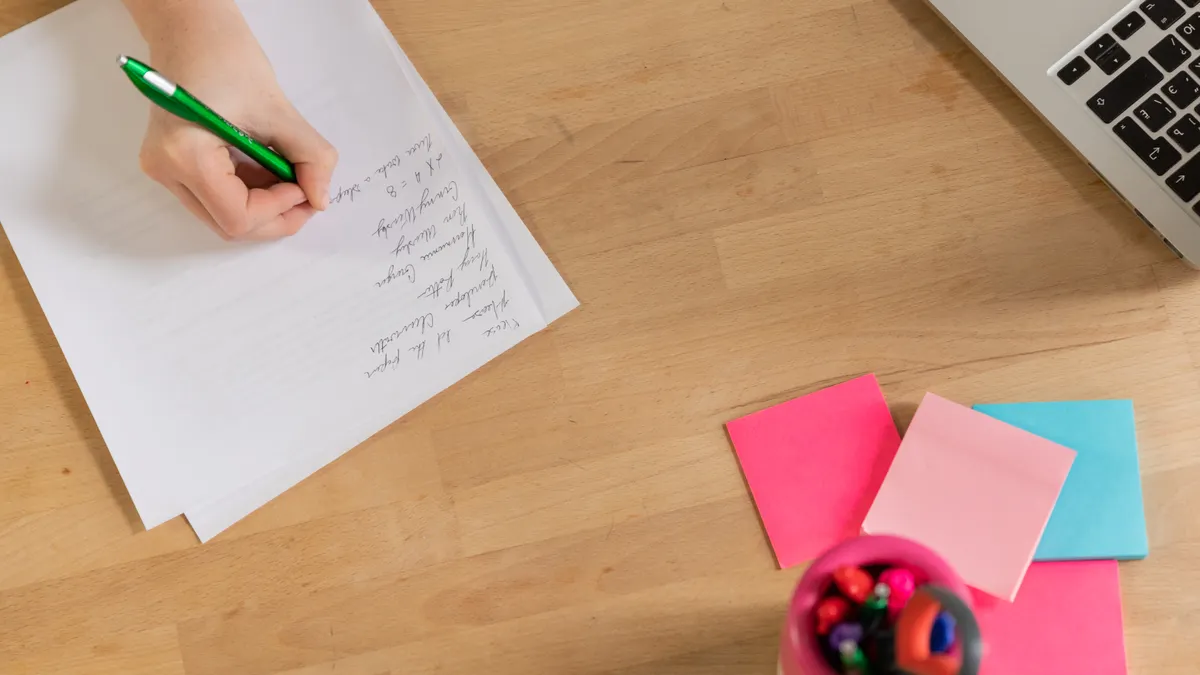
The right edit depends on the draft’s risk level, not on how smooth it reads. If the piece is a blog post about office plants, then a light structural edit may be enough. If it is legal, medical, financial, or product-advice content, then factual checking matters more than style, and a sentence that sounds polished can still be wrong.
I sort drafts into three buckets. A clean bucket means the draft is mostly right, but the tone, examples, and structure need work. A medium bucket means the draft has the right topic but weak logic, thin sourcing, or awkward sections. A bad bucket means the draft misses the brief, uses the wrong audience level, or includes claims you cannot safely publish.
Here is the decision table I would use:
| Situation | Best Path | Why Other Options Fail |
|---|---|---|
| The draft is clear but generic | Light edit | A full rewrite wastes time and can erase usable structure |
| The draft is on-topic but shallow | Substantial rewrite | Surface edits will not fix missing examples or weak reasoning |
| The draft contains factual claims you cannot verify | Fact-check first, then edit | Style work on top of bad facts only makes the piece look more convincing |
| The draft sounds nothing like your brand | Voice rewrite | Keeping the original phrasing leaves the mismatch obvious |
| The draft is for YMYL content | Expert review before publication | A copy edit alone is not enough for high-stakes topics |
If you’re unsure, ask one blunt question: would I trust this draft if a customer, editor, or regulator read it line by line? If the answer is no, don’t start by changing adjectives. Start by fixing the foundation.
My preferred sequence for a mixed-quality draft
- Read the whole piece once without editing.
- Mark factual claims, statistics, product names, laws, and dates.
- Flag anything that sounds like your brand would never say it.
- Check whether the intro answers the search intent in the first 2-3 sentences.
- Fix structure before sentence-level style.
- Then clean grammar, rhythm, and transitions.
The common mistake is to edit line by line from the top. That feels productive, but it often means you spend 40 minutes smoothing a paragraph that should have been cut. Quick check: if the draft is mostly right but dull, you need an edit; if it is wrong in substance, you need a rewrite.
How do I edit content from a writing service without wrecking the draft?
You preserve the useful parts by editing in passes, not by freehand rewriting everything at once. The first pass should be about meaning, the second about structure, and the last about voice and mechanics. If you reverse that order, you end up beautifying a weak draft instead of improving it.
Start with the opening. If the first paragraph does not state the topic and the reader’s problem clearly, fix that before touching anything else. Then scan headings. A good piece should move like a ladder: each section answers a different subquestion. If two headings say nearly the same thing, merge them. If a heading is generic—“Best Practices,” “Conclusion,” “Final Thoughts”—replace it with something specific.
I would use this workflow:
- Copy the draft into a separate document so you never destroy the original.
- Highlight every claim that needs verification.
- Check whether the piece matches the promised angle, audience, and format.
- Cut repetition first; repeated ideas hide weak structure.
- Move paragraphs until the logic works in one read-through.
- Rewrite the intro and conclusion last so they reflect the final shape.
If the writing service gave you SEO content, do not stuff keywords into every other paragraph. Search engines reward clarity and usefulness far more than brute repetition. A page about “how to edit content from a writing service” should naturally include terms like copy edit, fact-check, line edit, and rewrite because those are the real subtopics. That is enough.
One useful benchmark: if a paragraph does not either explain, qualify, or advance the argument, it probably does not belong. That is especially true on service pages and blog posts where the reader is already skeptical.
Quick check: if the draft reads fine but feels bloated, you need a cut-and-reorder pass before you do any sentence polishing.
Which edits should happen first: structure, facts, or voice?

Facts come first when the topic has real-world consequences; structure comes first when the draft is merely awkward; voice comes first only after both of those are stable. That order saves you from reworking the same text three times.
If the piece contains numbers, product comparisons, legal claims, medical advice, or references to standards like AP Style or ISO terminology, verify those claims before you rewrite a single sentence. A sentence with a wrong claim still fails even if it sounds elegant. If the draft is a brand piece with no risky claims, then structure usually matters most because readers leave when they cannot follow the argument.
For a practical edit order, I would do this:
- List every factual statement that could be checked.
- Verify names, dates, tool features, policy language, and definitions against primary sources where possible.
- Fix the outline so each section answers one question only.
- Rewrite topic sentences so they tell the reader what each section does.
- Adjust voice: shorter sentences, consistent tone, fewer hedges.
- Do a final proofread for grammar, punctuation, and formatting.
Here is where many people get it backward. They fall in love with phrasing and ignore the fact that the piece starts in the wrong place. If the audience is a busy founder, a 2,000-word throat-clearing intro is a problem even when every sentence is grammatical. If the audience is technical, vague reassurance is worse than no explanation.
I also watch for false confidence. Phrases like “the best,” “guaranteed,” or “always” should be qualified unless you can support them with a real, checkable source. When in doubt, write what you can defend and leave out what you cannot. For guidance on plain, verifiable claims, see the FTC’s advertising rules and the AP Stylebook’s advice on precise wording. FTC advertising guidance and AP Stylebook.
Quick check: if the piece has claims that matter, verify them first; if it has logic problems, fix the outline before the wording.
What should I change to make it sound like me?
You make it sound like you by changing the choices, not just the words. Voice lives in sentence length, level of directness, preferred examples, and how much certainty you use. If your brand is blunt and practical, a soft, hand-holding draft will feel fake even after grammar cleanup.
Therefore, the fastest way to find voice mismatches is to compare the draft to three things: your best existing piece, your homepage copy, and the way your subject-matter people actually talk in meetings or briefs. I am not talking about copying quirks. I am talking about recognizing whether the draft is too formal, too chatty, too promotional, or too cautious.
Some concrete fixes:
- Shorten long sentences if your brand sounds decisive.
- Remove motivational filler if your audience wants clear steps.
- Swap abstract nouns for concrete verbs.
- Replace “we believe” language with direct recommendation if the site’s voice is authoritative.
- Keep jargon only if your audience uses it.
A writing service draft often sounds generic because it is built to avoid offense. That is bad for trust. Readers can hear when no one stands behind the argument. If the piece is for a small, expert audience, say less and mean more. If it is for beginners, define the terms once and stop repeating them.
I would not chase a personal voice so hard that the piece becomes inconsistent. One strong voice is better than a quirky one. If the rest of the site uses calm, factual language, do not turn the piece into a comedy sketch just to “make it human.”
Quick check: if a paragraph could sit on any competitor’s site unchanged, it still sounds like a writing service draft.
When should I reject the draft instead of editing it?
You should reject the draft when fixing it would take longer than assigning it again. If the angle is wrong, the reader is wrong, or the content is built on shaky facts, editing becomes expensive rescue work.
There are a few hard-stop situations:
- The draft answers a different question than the one you assigned.
- The writer ignored source materials you provided.
- The piece contains invented specifics you cannot verify.
- The structure is so poor that a rewrite would be faster than cleanup.
- The tone is off by a mile and the writer cannot be steered with notes.
That last point matters. If you have already gone through one revision and the next version is still missing the brief, stop pretending the problem is small. A second or third round may be justified for a strong draft with fixable gaps. It is not justified for a piece that misunderstands the assignment.
This is where cost and time matter. A cheap draft that needs 90 minutes of expert editing may cost less up front, but the total time can still be higher than a better draft from a stronger writer. If you are paying internally for the edit, the hidden cost is even higher because someone with subject knowledge is now acting as a cleanup crew.
I would reject and restart when the draft fails at least two of these three: correct topic, correct audience, correct structure. One miss is salvageable. Two usually mean the draft was assembled against the brief, not from it.
Quick check: if you cannot fix the piece without changing nearly every paragraph, do not call that editing.
What are the edge cases that break the normal rules?
These situations break the usual “edit for flow, then polish” advice because the risk or the format changes the job. If any of these apply, the edit process has to change too.
-
The draft is for YMYL content.
What changes: accuracy matters more than style, and unsupported advice is a liability.
What to do instead: verify against authoritative sources such as government agencies, professional associations, or standards bodies before line editing. -
The writing service used AI heavily.
What changes: the prose may be grammatically clean but semantically thin or repetitive.
What to do instead: check for invented specifics, generic transitions, and loops in the argument; then rebuild the outline. -
The piece is meant to rank for a competitive keyword.
What changes: search intent matters more than clever phrasing.
What to do instead: compare the piece to the top search results and make sure it matches the dominant intent, not just the keyword. -
The piece must match a legal or regulated brand voice.
What changes: compliance language, disclaimers, and approved terminology may be mandatory.
What to do instead: consult the brand or legal style guide first and, if the topic carries legal or regulatory risk, consult a qualified professional before publication. For source material, use the style guide and any applicable regulatory guidance. -
The piece includes quotes, case studies, or testimonials.
What changes: every quote or anecdote needs source verification.
What to do instead: remove anything you cannot attribute cleanly, even if it makes the piece shorter. -
The piece is a ghostwritten thought-leadership piece.
What changes: the writer’s voice should disappear, but the client’s logic must stay sharp.
What to do instead: edit for argument, not just grammar; the piece should sound like a real person with opinions, not a content machine.
A good rule here is simple: if the content affects money, health, rights, or reputation, I would slow down and verify before I refine. Quick check: if the piece sits in a regulated category or depends on unseen sources, normal copy editing is not enough.
A practical edit workflow you can reuse every time
The safest workflow is the one that keeps you from doing polished damage. If you want a repeatable process, use the same sequence every time and stop trying to “fix as you read” unless the draft is tiny, under 500 words.
Start with a clean copy. Then run the draft through this path:
- Read once for the main answer: does it actually solve the reader’s problem?
- Mark every factual claim, brand mention, and dated reference.
- Check whether the first 100 words name the topic and the reader’s situation.
- Cut duplicate points and weak filler paragraphs.
- Rebuild the headings so each one adds a new step or angle.
- Rewrite any section that feels borrowed, vague, or off-brief.
- Do a final proofread in print view or at a large zoom so small errors stand out.
If the piece will be published on a CMS, use the editor’s preview view before approval. Formatting bugs, broken bullets, and awkward heading levels often hide in the interface. A 1,200-word piece with a broken H2 hierarchy is still a broken piece.
I would also keep a small style checklist beside the draft: preferred spelling, tone limits, banned phrases, capitalization rules, and any source requirements. That saves time on the second round and keeps the edit from turning into a debate about taste.
Quick check: if you need the same cleanup pattern more than once, turn it into a checklist and stop improvising.
FAQ
How much should I edit a writing service draft?
You should edit only as much as the draft needs to become accurate, useful, and on-brand; if that means a rewrite, call it a rewrite.
What is the first thing to check in a service piece?
Check whether the piece answers the brief, names the topic clearly, and contains any claims that need verification.
Should I edit for voice before facts?
No. Facts and structure come first; voice comes after the piece is accurate and logically organized.
When is a rewrite better than editing?
A rewrite is better when the piece has the wrong topic, the wrong audience, or too many problems to fix efficiently.
What sources should I use when checking claims?
Use primary or authoritative sources such as official documentation, government agencies, professional associations, or the original brand materials.
Drafted with AI; not yet reviewed by a person.