Content Writer Hiring and Evaluation: The Complete Guide
Content writer hiring and evaluation — The Complete Guide: Quick Answer: for most teams, the safest hire is a writer who can pass a 250–400 word paid…
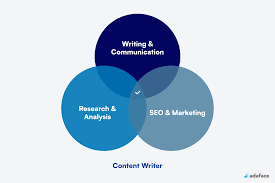
Content Writer Hiring and Evaluation The Complete Guide
Last updated: October 13, 2026
Quick Answer: for most teams, the safest hire is a writer who can pass a 250–400 word paid test, show 3 relevant samples, and explain their sourcing decisions in one short conversation. In this guide to Content Writer Hiring and Evaluation: The Complete Guide, I focus on how to choose that person without guessing. Strong content writer hiring and evaluation starts with judgment, not just grammar. A strong content writer can explain a topic clearly, match your audience’s level, and turn a brief into a useful piece without needing line-by-line rescue. If you only screen for samples and “SEO experience,” you will miss the writers who can actually move a reader to trust, click, or buy.
Key Takeaways
- Hire for judgment, not sentence polish alone.
- Better briefs describe deliverables, process, and review like an editor would.
- A strong portfolio shows controlled range, not random samples.
- The best fit depends on volume, specialization, and how much editorial control you want.
I write and edit in this field, and the part most teams miss is simple: content writing is not one skill. It is research, structure, voice control, accuracy, and business sense packed into one hire. If you treat it like “someone who writes blog posts,” you will overpay for polish and underbuy thinking. Before you decide, consult a professional editor or hiring specialist if the work is technical, regulated, or high stakes; the U.S. Bureau of Labor Statistics notes that writers and authors work across many formats and industries, which is one reason the role needs careful evaluation rather than a single sample test. U.S. (Source: Bureau of Labor Statistics)
What you are really hiring for
You are not hiring for sentences alone. You are hiring for a writer who can make decisions under constraints: audience, format, brand voice, legal limits, search intent, and a deadline. That is why a solid hire usually looks less like a novelist and more like an editor who can write cleanly.
The first question I would ask is not “Can this person write?” It is “Can this person write for my reader without constant supervision?” That difference matters because one weak hire can create hidden costs: rewrites, missed launches, inaccurate claims, and a team that stops trusting the draft before it is even finished.
For most businesses, the right writer needs to handle several jobs at once:
- Translate subject matter into plain language
- Keep claims accurate and attributable
- Adapt to your format, whether that is a landing page, article, email, or white paper
- Write in a voice that sounds like your brand, not a freelance portfolio
That is why the safest evaluation is not “Do I like the samples?” but “Can this writer do the actual work I need, with my brief, my constraints, and my standards?”
A useful benchmark is this: if the role involves technical, regulated, or B2B material, you should expect more than pretty prose. You need someone who can read a source document, understand what is material, and know when to push back. If the role is lighter brand blogging, you can relax some of that rigor, but not all of it. Even simple pieces need structure and evidence.
How do I write a job description that attracts the right writers?
You attract better writers by describing the work like an editor, not like a buzzword list. A job description that says “seeking a versatile rockstar content ninja” tells me nothing. A job description that names the deliverables, audience, review process, and subject complexity tells me exactly who should apply.
Start with the format. A writer who is excellent at 800-word how-to pieces may be a poor fit for case studies, email sequences, product pages, or executive thought leadership. Say the format plainly. “You will write two 1,200-word service pages and four monthly pieces” is better than “must create content.”
Then specify the decision-making level. Will the writer be expected to generate the outline, or only draft from one? Will they interview SMEs? Will they use sources? Will they optimize for search terms, or is the goal brand authority? A senior freelancer will screen in or out based on those answers.
Include the standards that matter:
- Source quality: peer-reviewed research, government guidance, trade publications, or internal SMEs
- Revision tolerance: one round, two rounds, or editorial collaboration
- Voice requirements: formal, direct, conversational, sales-oriented
- Legal or compliance review if the work touches health, finance, privacy, or safety
If you skip these details, you will attract generic applicants and repel the exact writers you want. A strong writer wants a clear problem. A weak brief invites vague resumes.
For pay, do not write a number you are not prepared to defend or maintain, but do signal whether the role is hourly, per project, or retainer-based. The wrong compensation model can be as much of a filter as the wrong skill set. A writer who prefers a steady monthly retainer may not want scattered one-off tasks, and vice versa. According to ZipRecruiter, U.S. freelance writers earn an average of about $27 per hour, while Indeed’s writer listings often vary much higher by specialty and market; that range is one reason clear pricing language matters. (Source: ZipRecruiter Indeed Career Guide)
The single best improvement I can suggest: publish a short sample task in the description. One paragraph is enough. Ask for a headline, outline, or rewrite of a short excerpt. That gives you a truer read than a polished portfolio alone.
What should a strong content writer portfolio actually show?
A strong portfolio shows range with control, not random samples. I would rather see three pieces that clearly solved different problems than ten pieces that all sound like the same generic blog. The best samples prove, in a practical sense, that the writer can adapt to audience, depth, and purpose.
Look for these signs:
- The opening is specific and earns the next sentence
- The structure makes scanning easy
- Claims are grounded in facts or qualified carefully
- The writer knows when to explain and when to move on
- The piece sounds like it was written for a human reader, not a keyword counter
If a portfolio is heavy on “top 10” listicles and light on actual reasoning, that tells me something. It may mean the writer can produce volume, but not judgment. That is fine if your work is purely templated. It is a problem if you need pieces that influence buyers or support trust.
I also look for evidence that the writer can work in different levels of complexity. A good portfolio might include:
- A service page with clear value propositions
- An educational piece that explains a nuanced topic
- A case study or interview-based piece
- A sales page or email with a clear call to action
What I do not want to see is a gallery of attractive but context-free excerpts. Pretty paragraphs do not tell me whether the writer can build an argument, handle revision, or keep a reader moving.
One useful test: read the piece out loud. If it sounds inflated, repetitive, or overly abstract, that style will likely show up in your drafts too. A good writer can make a sentence carry information without stuffing it with decoration.
Hiring content writer from agencies, freelancers, or in-house: what changes?
The right choice depends on volume, specialization, and how much editorial control you want. I would choose a freelancer for flexibility, an agency for scale, and an in-house hire when the subject matter is central to the business and the work never really stops.
A freelancer usually wins when you need one or two strong writers, variable workload, or a narrow specialty. You get direct contact and usually faster communication. The downside is continuity: if the person gets busy, leaves, or underestimates the brief, your pipeline can stall. You also carry more responsibility for editing and direction.
An agency usually wins when you need multiple formats, backup coverage, or production across several accounts. Agencies can absorb volume and provide project management. The trade-off is that you may not always know who is actually writing your piece, and quality can vary from one team member to another. That matters if tone or accuracy are critical.
An in-house writer wins when the topic changes fast, internal knowledge is valuable, and content is part of the business engine rather than a side function. The drawback is fixed overhead. If your needs are uneven, a full-time hire may sit underused. Hiring in-house also does not remove the need for editing; it just moves the editing inside the company.
A simple rule helps:
- Choose freelance when you need agility and one strong specialist
- Choose agency when you need throughput and coordination
- Choose in-house when you need institutional memory and constant output
The mistake is assuming one model is “better.” Each one fails in a different way. Freelancers fail by inconsistency, agencies by distance, in-house hires by becoming expensive if the role was narrower than the salary.
How should you evaluate a content writer before hiring?
The best evaluation combines a writing sample, a short paid test, and a conversation about decisions. If you rely on interviews alone, you will hire charm. If you rely on portfolios alone, you will hire best-case scenarios. If you rely on a long unpaid assignment, you will lose good candidates.
I would use a three-part process.
First, screen for relevance. Does the writer have work in your subject area or at least in your format? A person who has only written lifestyle pieces may still be excellent, but you should not pretend the fit is obvious.
Second, give a short paid test. Keep it realistic and bounded. One brief, one source packet, one deliverable. Ask for something like:
- a 3-point outline,
- a 250–400 word draft,
- or a rewrite of a weak sample section.
This reveals how the writer thinks, not just how they polish.
Third, ask how they would handle constraints. Good questions include:
- How do you decide what to include when the brief is too broad?
- How do you verify factual claims?
- What do you do when a source conflicts with the angle?
- How do you respond when an editor asks for a structural rewrite?
The answers matter more than polished language. A writer who can explain revision logic is usually easier to work with than one who only talks about inspiration.
I also like one direct screening question: “Show me a piece you had to fix after feedback, and explain what changed.” That tells you whether the writer can accept editorial direction without defensiveness.
Do not make the test too long. A one- to two-hour task is enough in many cases. A massive free assignment mostly measures willingness to work for free, not skill. If you want serious applicants, treat their time seriously.
The evaluation scorecard I would use
I would score writers on six criteria, because this keeps me from being fooled by one strong trait. A graceful style can hide weak sourcing. Deep research can hide bad pacing. A scorecard exposes those trade-offs.
Here is a practical head-to-head matrix you can adapt:
| Criteria | Writer with strong samples only | Writer with strong test + interview | Winner for the condition |
|---|---|---|---|
| Audience fit | May look polished but hard to confirm | Shows how they adapt tone and detail | Strong test + interview, when the audience is specific |
| Research discipline | Hard to infer from portfolio alone | Easier to see in the source-backed draft | Strong test + interview, for factual or technical work |
| Structural thinking | Can be hidden by good editing | Revealed by outline choices and transitions | Strong test + interview, for strategic pieces |
| Speed | Unknown | Can be estimated from test turnaround | Samples only, when speed is the main need |
| Revision tolerance | Often invisible | You can ask directly how they handle edits | Strong test + interview, for collaborative teams |
| Brand voice match | Looks close, may not be consistent | Easier to judge from custom writing | Strong test + interview, for branded content |
| Topic depth | May be impressive in one niche | Clearer when asked to solve your exact brief | Strong test + interview, for specialized subjects |
| Cost risk | Can hide future rewrite costs | Lower risk of expensive mismatch | Strong test + interview, for long-term hiring |
A scorecard works only if you use it honestly. If the candidate is charming but weak on sourcing, do not rescue them with a higher “vibe” score. If the writing is competent but dry, decide whether dryness is actually a problem for your audience.
My view is blunt: if the work will be published under your name, a writer who cannot pass a short practical test should not be hired on portfolio alone.
How do I know if a content writer is actually good at the job?
A good writer makes your editing lighter, not heavier. That is the clearest sign. If every draft comes back with structural problems, missing context, unsupported claims, or awkward transitions, the writer is not ready for independent work, no matter how nice the prose looks.
I look for five signs of real competence:
- The introduction gets to the point fast.
- The outline reflects the reader’s questions, not the writer’s habits.
- The draft uses examples, specifics, or comparisons instead of vague promises.
- The tone stays consistent from start to finish.
- The piece leaves fewer questions than it creates.
A weak writer often signals the problem in the first 200 words. The draft may sound polished but say very little. Or it may over-explain obvious ideas while skipping the core point. That usually means the writer is filling space rather than guiding a reader.
Another useful test is how the writer handles sources. Good writers cite enough to support the claim without turning the draft into a bibliography. Weak writers either drop in too many links or make sweeping statements with no support at all. Both create work for you. According to the Reuters Institute’s 2024 report on audience trust, readers continue to reward clear sourcing and transparency, which is one reason this skill matters in content writer hiring and evaluation. Reuters Institute Digital News Report 2024
If you are hiring for SEO-driven writing, do not confuse keyword placement with search usefulness. A piece can mention a phrase several times and still fail the reader. What matters is whether the piece solves the query better than competing pages. That means tighter structure, clearer subheads, and better answers.
There is one category of writer I would avoid for most business work: the person whose samples are stylish but evasive. If the piece sounds impressive while revealing very little, the draft will usually require heavy editorial repair. Style without substance costs time.
When should I not hire a content writer at all?
Do not hire a writer when the problem is actually strategy, positioning, or product confusion. A writer cannot fix a bad offer. They cannot invent a useful message if no one has decided what the business stands for. They cannot turn an unclear service into a persuasive one by syntax alone.
You should pause hiring if:
- The brief changes every week
- No one owns final approval
- The audience is not defined
- The product itself is still shifting
- The company wants “more content” but cannot say why
That last point is common. If the only goal is volume, the output usually becomes generic. More pieces are not the same thing as more traction. A writer can help with execution, not with empty strategy.
I would also hold off if the work requires legal, medical, or financial precision and no expert review process exists. In those fields, the writing process has to include fact checking and, often, qualified sign-off. A writer working alone should not be expected to carry that burden.
Sometimes the better answer is not a hire but a smaller intervention:
- tighten the brief,
- rewrite the homepage,
- build a source bank,
- or set an editorial system first.
A writer is an amplifier. If the signal is weak, the amplification just makes the weakness louder. For teams trying to build authority over time, Google’s own Search Central guidance is clear that helpful, people-first content is what performs best in search ecosystems. (Source: Google Search Central)
What are the biggest hiring mistakes?
The biggest mistake is hiring for charisma. A confident call, a fast reply, and a neat portfolio can create false certainty. But good content work depends on reliability more than charm.
The second mistake is paying for volume when you really need judgment. Ten thin pieces rarely beat three strong ones, especially if your aim is trust or conversion. A lower per-piece rate can still be expensive if it creates rewrites.
The third mistake is failing to define the editing relationship. Some writers want autonomy. Some want close feedback. If you never say how revision works, disappointment is nearly guaranteed.
A fourth mistake is ignoring topical depth. A writer who is excellent in general marketing may struggle in SaaS, legal services, finance, health, or manufacturing because those fields have vocabulary, risks, and reader expectations that matter.
A fifth mistake is not checking consistency across samples. One elegant piece can hide a messy process. I care more about whether the writer can produce the same standard across three assignments than whether one sample sparkles.
If I had to reduce the entire process to one rule, it would be this: hire for the kind of thinking your drafts require. If the work needs synthesis, hire a synthesizer. If it needs persuasion, hire a persuasive strategist. If it needs accuracy, hire a careful editor-writer hybrid.
Exception scenarios: when the usual verdict flips
The standard choice flips in a few specific situations, and ignoring those cases causes bad hires.
-
You need one heavily branded launch asset.
A specialist agency can beat a freelancer if the project needs design, strategy, copy, and coordination in one package. If the deliverable is a launch page tied to a dated campaign, that bundled structure can save time. -
You have a narrow technical niche and constant updates.
In-house wins if the subject changes weekly and the writer must stay close to product teams, SMEs, and internal documentation. The cost makes more sense when context matters every day. -
The work is simple, repeatable, and high-volume.
A junior freelancer or a managed agency team may be better than a senior generalist. If the task is standardized product descriptions or templated pieces, depth can be overkill. -
The first draft must survive compliance review.
If the final piece passes through legal, medical, or financial review, I would favor someone with disciplined sourcing and a low-drama process over a beautiful stylist. The work needs accuracy and traceability more than flair.
These exceptions do not change the principle. They change the staffing model because the risk changed.
The verdict: which one to choose and why
Choose a freelancer if you need direct communication, flexible volume, and one strong writer who can think independently. Choose an agency if you need coordination, backup coverage, and multiple deliverables moving at once. Choose in-house if the subject is core to the business and the writing pipeline will never really stop. Choose none of them if the brief is still vague, the product is unclear, or no one can own editorial standards.
That is the cleanest decision I can give: match the hiring model to the kind of work, then evaluate the writer with a short paid test, relevant samples, and a real brief. If you do only one thing differently, do that. It will save more bad hires than any list of “top traits.”
A practical hiring process you can use this week
A usable process is better than a perfect one. Here is the sequence I would follow if I needed to hire now:
- Write a one-page brief with audience, format, goal, and examples.
- Screen for relevant samples only.
- Assign a short paid test tied to your real work.
- Score the result on structure, accuracy, tone, and judgment.
- Ask one live question about revision and one about sourcing.
- Start with a small project before offering a long retainer or full-time role.
The point is not to make hiring slower. The point is to make it less random. A short process can still be rigorous if each step reveals a different skill.
The best writers usually do not need hand-holding, but they do need clarity. When the brief is clear and the evaluation is fair, the right person shows up fast. When either of those is missing, even a talented writer looks average.
FAQ
How long should a writing test be?
A writing test should be short enough to respect the candidate’s time and long enough to show judgment. For many roles, a 250–400 word task or a one-page outline is enough.
Should I hire someone who only has SEO samples?
Only if the work is mainly search-driven and the samples still show clear structure, useful answers, and readable prose. If the samples feel mechanical, keep looking.
Is it okay to ask for an unpaid sample?
I would avoid that for anything beyond a tiny task. A long unpaid assignment filters for free labor, not necessarily quality.
What matters more: niche expertise or writing skill?
For most roles, I would choose writing skill plus enough subject familiarity to learn quickly. For regulated or technical fields, stronger niche expertise matters more.
How many samples do I need to review?
Three is usually enough to see patterns. One strong sample can be luck. Three gives you a better read on consistency, range, and tone.
Drafted with AI; not yet reviewed by a person.