How to Write a Content Writer Job Description
How to write a content writer job description: Quick Answer: A strong content writer job description is usually 400 to 800 words, includes a clear salary…
How to Write a Content Writer Job Description
Last updated: October 11, 2026
Key Takeaways
- Use a simple structure with role summary, duties, skills, tools, metrics, and reporting line.
- Avoid vague personality labels; focus on the work itself.
- Ask only for the skills that predict success.
- Match the title to the actual writing work, since “content writer” can mean several roles.
Quick Answer: A strong content writer job description is usually 400 to 800 words, includes a clear salary range when possible, and names the exact content types, tools, and success metrics so the right candidates can self-select.
A good content writer job description tells the right people what kind of writing they will do, how much subject knowledge they need, and what success looks like in the first 90 days. If you are writing a content writer job description, be specific about formats, scope, and evaluation so you get better-fit applicants and fewer mismatches. If you skip that, you get generic applicants, mismatched portfolios, and a hiring process that drags on for weeks.
What should a content writer job description actually do?

It should filter, not just advertise. If your goal is to hire someone who can produce blog posts, landing pages, email copy, or SEO articles, the description has to say which of those matter most and how the work gets judged.
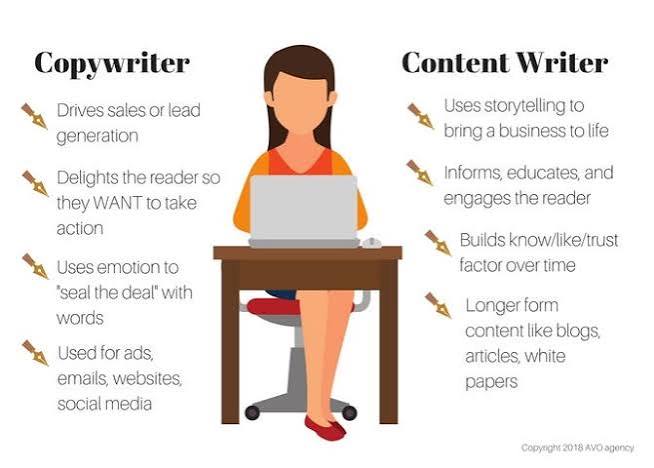
If you write “content writer” and stop there, the role is too loose. One applicant may picture a newsroom-style writer. Another may expect a conversion copywriter. A third may only want to repurpose social posts. Those are different jobs.
I would treat the job description as a decision tool with four jobs; if the role is high-stakes or specialized, consider reviewing it with HR or an employment lawyer before you publish it:
- Tell candidates the content formats they will write.
- State the subject area and how deep they must go.
- Say what tools and standards matter, such as Google Docs, WordPress, Ahrefs, or AP style.
- Show the difference between “good enough” and “strong” work.
A generic post fails because it rewards volume over fit. If you need someone to write B2B SaaS blog posts with SME interviews and SEO briefs, say that. If you need product-led lifecycle emails, say that instead. If the role is not for someone who wants to write fiction, essays, or social-first copy, say that too.
Quick check: if a strong candidate cannot picture their average Tuesday from your description, it is too vague.
How should I structure the content writer job description?
You should use a simple structure: role summary, responsibilities, must-have skills, preferred skills, tools, performance expectations, and reporting line. That order works because it answers the most important hiring question first: “What will this person actually do?”
Here is the structure I would use for almost any content writer job description:
- Role summary — one short paragraph naming the content types and audience.
- Core responsibilities — 5 to 8 bullets tied to deliverables, not personality traits.
- Required skills — only the non-negotiables.
- Preferred skills — things that help but do not block qualified candidates.
- Tools and workflows — the software, CMS, and review process.
- Success metrics — what good work looks like after 30, 60, and 90 days.
- Logistics — remote, hybrid, location limits, schedule, contract type, salary band if you can publish it.
If you are hiring for a small business, this can fit on one page. If you are hiring for a regulated field like healthcare or finance, add more detail about approvals and compliance reviews. A 500-word post may be enough for a startup. A role that touches legal claims or medical claims needs more precision.
A useful rule: list no more than 8 responsibilities and no more than 7 required skills. More than that and the description starts reading like a wish list.
| Situation | Best Path | Why Other Options Fail |
|---|---|---|
| You need a generalist writer for a small team | One-page description with clear formats and tools | A long corporate post scares off good candidates and hides the real work |
| You need an SEO-heavy writer | Put keyword research, search intent, and CMS work in the core duties | If SEO is buried in “nice to have,” you’ll attract non-SEO writers |
| You need a specialist in finance, health, or law | Spell out subject standards and review steps | Vague wording invites applicants who cannot handle compliance |
| You need a senior writer | Add ownership, editing, and strategy duties | Junior-style bullets make the role look lower level than it is |
Quick check: if your current draft could describe three different jobs, it needs a tighter structure.
What should go in the responsibilities section?

It should name deliverables and workflows, not personality traits. If you write “creative, self-motivated team player,” you have described a human being, not the job.
Start with the actual outputs. If the writer will publish 4 SEO articles a week, say that. If they will turn interview notes into case studies, say that. If they will refresh old pages in HubSpot or WordPress, say that. Numbers help here because they force realism. A role that expects 12 polished articles a week is very different from one that expects 2 deeply researched pieces and 1 round of revisions.
A strong responsibilities section usually includes:
- Drafting blog posts, guides, landing pages, or emails
- Interviewing subject matter experts
- Following an editorial calendar
- Optimizing for search intent or conversion goals
- Revising based on editor feedback
- Using an agreed style guide, such as AP Stylebook or an internal guide
- Publishing or formatting in a CMS like WordPress, Contentful, or HubSpot
If the role includes SEO, say whether the writer is expected to do keyword research, write from an existing brief, or optimize draft content only. Those are different levels of ownership.
If the role includes ownership of tone, say so. If the writer is expected to write in a technical or regulated space, mention review cycles. A content writer who works in a medical practice may need clinician approval before publication. A writer in ecommerce may need to work with product data and merchandising calendars.
What I would avoid is a laundry list of every task the marketing team can imagine. That creates an impossible job and makes candidates assume your team does not know what it needs.
Quick check: if each bullet does not map to a real weekly task, cut it.
What skills and qualifications should you ask for?
You should ask for the smallest set of skills that still predicts success. If you ask for too much, you exclude good writers. If you ask for too little, you get people who can write but cannot work in your environment.
The must-haves usually fall into five buckets:
- Writing quality — clear grammar, clean structure, strong sentence control.
- Adaptability — can write in your brand voice and switch formats.
- Research skill — can verify facts and synthesize sources.
- Tool comfort — can use Google Docs, a CMS, and basic collaboration tools.
- Topic fit — knows the subject area well enough to learn quickly.
If you are hiring for SEO content, ask for familiarity with keyword tools like Ahrefs, Semrush, or Google Search Console. If SEO is not central, do not overstate it. A writer who can craft strong copy in Google Docs may be a better fit than one who lists a dozen tools but cannot write clean paragraphs.
For years of experience, I would be careful. A better filter is the kind of work they have shipped. A junior writer with three polished portfolio samples may be more useful than a mid-level applicant who only has vague claims.
Education is another place where hiring managers overreach. A journalism, English, communications, or marketing degree can help, but it is rarely the real deciding factor. Strong clips matter more.
Be honest about what is non-negotiable and what can be taught in 30 days. Style preferences can be taught. Good judgment is harder.
Quick check: if a qualification does not help the person do the job in the first month, it probably belongs in “preferred” or not at all.
How do I write the description for the exact kind of writer I need?
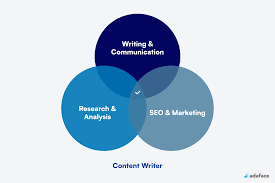
You should match the wording to the kind of writing work, because “content writer” covers several roles that look similar on paper and act very different in practice.
If you need an SEO content writer, then lead with search-driven work: keyword research, briefs, on-page optimization, internal linking, and updates to existing posts. If you need a brand content writer, then emphasize tone, messaging consistency, and campaign support. If you need a technical content writer, then require comfort with product docs, SME interviews, and complex subjects. If you need a product content writer, focus on in-app copy, onboarding, lifecycle emails, and UX collaboration.
The wrong description often mixes these together. That is how companies end up hiring a writer who is excellent at blog posts but uncomfortable with UX microcopy, or a copywriter who can write landing pages but does not know how to work from search intent.
Here is the decision rule I use:
- If the main output is traffic, make SEO the center.
- If the main output is conversion, make product or copywriting the center.
- If the main output is education, make research and clarity the center.
- If the main output is brand voice, make tone control the center.
That also changes the sample task. For an SEO role, ask for an outline or rewrite based on a keyword brief. For a brand role, ask for a short section rewritten in different tones. For a technical role, ask for a plain-English summary of a complex topic.
Quick check: if the same person would not thrive in both your blog and your homepage copy, do not describe the role as one general content writer job.
What are the edge cases where the normal advice breaks down?
You should change the job description when the work, risk, or hiring market makes the usual format misleading.
-
You are hiring freelance, not full-time.
What changes: you do not need benefits, career path, or team ladder language.
What to do instead: state deliverables, turnaround time, revision limits, and payment terms. A 2-round revision cap is clearer than a vague “must be open to feedback.” -
You need someone for a regulated industry.
What changes: accuracy matters more than speed.
What to do instead: name the review chain, cite the standards, and note whether legal, compliance, or clinical approval is required. -
You want a hybrid writer-editor.
What changes: the role includes judgment, not just drafting.
What to do instead: add editing, line editing, and fact-checking duties; ask for experience managing a 5- to 10-piece content queue. -
You are hiring for a startup with shifting priorities.
What changes: the role must tolerate ambiguity without becoming vague.
What to do instead: say the first 90 days may focus on one channel, such as blog or email, before expanding. -
You need multilingual or localization support.
What changes: fluency is not enough.
What to do instead: specify which language variant, whether translation or transcreation is needed, and who approves final copy. -
You are replacing a writer who failed before.
What changes: the problem may be the process, not the person.
What to do instead: rewrite the description to fix the old mismatch. If the last hire failed because the team expected SEO strategy but hired a pure copywriter, name SEO strategy this time.
Quick check: if your work involves approvals, ambiguity, or specialized subject matter, the standard template is too thin.
What should the posting say about compensation, process, and red flags?
It should say enough to prevent wasted applications without turning into a novel. Salary band, contract type, location rules, and the hiring steps all help serious candidates decide quickly.
If you can publish a salary range, do it. A range such as “$55,000–$70,000” or “$30–$45/hour” is more useful than “competitive pay.” If you cannot publish a range, at least state whether the role is entry-level, mid-level, or senior. Location matters too: fully remote, hybrid 3 days a week, or onsite in one city. Those details save everyone time.
A simple process also helps. Candidates want to know whether they will do a portfolio review, a writing test, one interview, or three. I would keep the process short unless the role is highly specialized. A 45-minute hiring manager interview and one focused sample task are often enough to assess fit for many content roles.
Watch for red flags in your own draft:
- “Must be willing to wear many hats” often means the scope is unclear.
- “Fast-paced environment” without specifics usually hides chaos.
- “Excellent writer with 10 years of experience” for an entry-level salary will backfire.
- “SEO knowledge preferred” when SEO is actually core to the job will attract the wrong people.
A candidate-facing description should answer three practical questions: what they will do, how they will be evaluated, and what the company is offering in exchange.
Quick check: if your compensation and process feel too vague to help a candidate decide, they are too vague.
FAQ
How long should a content writer job description be?
About 400 to 800 words works for most roles. If the job is highly technical or regulated, it can be longer.
Should I include a writing test in the job description?
Yes, if you plan to use one. Say what the test covers, how long it takes, and whether candidates are paid for it. A 30- to 60-minute sample task is easier to accept than a hidden homework assignment.
Do I need to list every tool the writer will use?
No. List the tools that affect the work day, such as Google Docs, WordPress, Notion, Ahrefs, Semrush, or HubSpot.
Is “content writer” too vague as a title?
Sometimes yes. If the job is really SEO writing, technical writing, or product copywriting, use the more specific title. Specific titles attract better-fit applicants.
Should I include portfolio examples in the posting?
Yes. Ask for 3 to 5 samples that match the type of writing you need. A portfolio request can help screen for fit, especially when the work is highly specific.
The simplest version I would use
I would write the job description around the actual deliverables, not the team’s wish list. If you need blog posts and SEO support, say that. If you need product copy, say that. If you need deep technical writing, say that and name the review process.
Drafted with AI; not yet reviewed by a person.